Introduction: Why Your Shopify Store Is Invisible to AI Search in 2026
Shoppers aren't clicking through blue links anymore. They're asking ChatGPT, Google AI Mode, and Perplexity questions like "What's the best women's hiking boots for wet weather under $200?" and getting direct product recommendations without ever touching a search results page.
ChatGPT referral traffic increased 52% year-over-year between September-November 2025, and GenAI has become the second-most popular source of product recommendations, trailing only physical stores.
AI Overviews now appear in almost 55% of all Google searches, up 115% since March 2025. That's not a trend worth watching, it's a shift already reshaping where purchase decisions get made.
If your Shopify store isn't structured for generative engines, it doesn't exist in these conversations. This guide covers what Generative Engine Optimization (GEO) is, why 2026 is the window to act, the three pillars every store needs, and how to measure results.
TLDR:
- AI referral traffic grew 52% YoY, AI is now the #2 product recommendation source after physical stores
- GEO structures your content to get cited by AI, not just ranked on SERPs
- Three pillars drive AI visibility: technical SEO, brand authority, and product data quality
- Early movers in GEO capture compounding visibility advantages that latecomers will struggle to close
- Measure success by tracking brand mentions and citations inside AI-generated responses
What Is Shopify GEO and How It Differs from Traditional SEO
Generative Engine Optimization (GEO) is the practice of structuring your Shopify store's content, data, and brand signals so AI-powered search engines can understand, summarize, and recommend your brand in natural-language answers.
The core difference from traditional SEO: generative engines don't "rank" pages, they build answers. When someone asks ChatGPT for running shoe recommendations, the AI synthesizes information from multiple sources to construct a response. Your goal is to be one of those sources.
Key Differences Between SEO and GEO:
| Factor | Traditional SEO | Generative Engine Optimization (GEO) |
|---|---|---|
| Platforms | Google, Bing | ChatGPT, Perplexity, Google AI Overviews, Gemini |
| Optimization Goal | SERP rankings | Brand mentions and citations in AI answers |
| User Behavior | Click through to websites | Get answers directly in AI interface |
| Content Format | Page-level ranking | Passage-level citation |
| Primary Tactics | Keywords, backlinks, technical SEO | E-E-A-T, information density, structured content |
| Measurement | Rankings, clicks, traffic | Brand mentions, citation frequency, AI referral traffic |
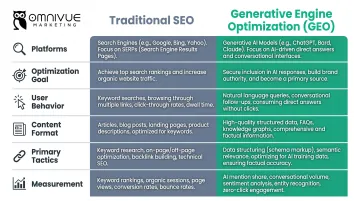
These distinctions matter, but they don't mean choosing one over the other. GEO does not replace SEO. Most AI platforms still rely on search indices for citation sources: ChatGPT uses its own crawler (OAI-SearchBot) to surface websites, while Google AI Overviews draw directly from traditional Google search rankings. Strong SEO performance is, in most cases, a prerequisite for GEO visibility. The stores that show up in AI answers are usually the ones that already rank well in search.
Why 2026 Is the Critical Window for Shopify Brands
Gartner predicts traditional search engine volume will drop 25% by 2026, with search marketing losing market share to AI chatbots and virtual agents. Organic click-through rates are already predicted to decrease by 25% by 2026 due to AI Overviews alone.
Current AI adoption numbers:
- ChatGPT reached 810 million monthly active users (up 5%)
- Gemini reached 346 million monthly active users (up 30%)
- AI platforms now drive approximately 1% of overall web traffic across 10 major industries
That 1% figure understates the real impact. ChatGPT accounted for nearly 21% of Walmart's incoming referral traffic in August 2025, representing roughly 1% of their overall traffic. For Etsy, that number exceeded 20%.
The Buyer Behavior Shift
Traditional search: "protein powder for women"
AI search: "What's the best plant-based protein powder for a 35-year-old woman trying to build muscle while managing PCOS, preferably unflavored and under $50 per month?"
The second query contains dramatically higher intent. If your Shopify store isn't structured to be cited in that answer, you're invisible at the most valuable moment in the purchase journey.
That intent gap is where GEO creates its competitive edge. Early movers in emerging channels, social commerce, mobile-first design, voice search, captured an outsized share before competitors caught on. Brands that build structured, authoritative, AI-readable stores now will become the default recommendations these tools surface at scale.
The window is open but closing. Brands that haven't started GEO aren't yet behind, but delay past 2026 and you'll be locked out of the fastest-growing traffic channel in ecommerce.
The Three Pillars of Shopify GEO
Every effective Shopify GEO strategy rests on three mutually reinforcing pillars: technical SEO fundamentals, brand authority, and data quality. SEO gets you crawled, brand authority gets you cited, and data quality gets you accurately recommended, each pillar depends on the others.
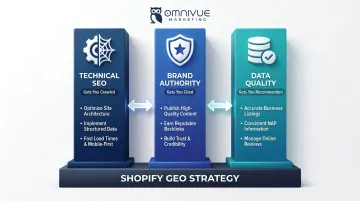
Pillar 1: Technical SEO and Site Architecture
AI crawlers depend on the same technical foundations as traditional search engines, with some crucial differences.
Non-Negotiables for AI Crawlers:
- Clean URL structures without unnecessary parameters
- Proper 301 redirects for all 4xx errors
- Complete and accurate sitemap.xml
- Robots.txt configuration that allows LLM crawlers access to key pages (size guides, return policies, product FAQs, store hours)
Shopify's Built-In Advantage:
Shopify uses server-side rendering (SSR) through its Hydrogen framework, which sends pre-rendered, fully-formed HTML to browsers. This makes content immediately visible to crawlers without JavaScript execution-headings, links, image alt text, and metadata are all available in an "ideal format" for both traditional search bots and AI crawlers.
Why Structured Data Matters for AI:
Schema markup allows AI tools to accurately ingest pricing, availability, ratings, and social proof without interpretation errors. Implement these schema types on your Shopify store:
- Product schema: Price, availability, SKU, brand
- Review schema: Aggregate ratings, individual reviews
- FAQ schema: Common questions and answers
- Breadcrumb schema: Site hierarchy and navigation
While schema markup doesn't guarantee citations, it provides "cleaner extraction" of product data for AI systems. This is how AI learns to trust the data it finds on your pages.
Managing AI Crawler Access:
OpenAI operates four crawlers-OAI-SearchBot (surfaces sites in ChatGPT search), GPTBot (training), ChatGPT-User (user-triggered), and OAI-AdsBot. Perplexity operates PerplexityBot and Perplexity-User. Each can be controlled independently via robots.txt, with changes taking approximately 24 hours to take effect.
Pillar 2: Brand Authority and Content Credibility
AI evaluates trust differently than traditional search engines. Generative engines look beyond your website-Reddit threads, press mentions, third-party reviews, influencer recommendations, and community signals all contribute to whether an AI tool will cite your brand.
Critical Data Point: ChatGPT mentions brands 3.2x more often than it cites them. The average prompt generates 2.4 brand mentions but only 0.74 citations. This means brand awareness across the web matters more than individual page optimization.
Key Authority-Building Levers:
- PR strategy that generates press mentions in authoritative publications
- Review management across Google, Trustpilot, and industry-specific platforms
- Consistent brand information across owned channels (social profiles, YouTube, Medium)
- User-generated content that creates semantic variety around your products
Before building more authority, audit what AI already knows about your brand. ChatGPT makes this easy, and free.
Use ChatGPT as a Brand Audit Tool:
Ask ChatGPT:
- "What does the internet say about [your brand name]?"
- "What are the top-rated [your product category] brands?"
- "What data do you find on this product page: [your URL]?"
These responses reveal content gaps, outdated information, and inconsistencies in how AI perceives your brand. For example, NAM Rentals achieved 30+ mentions across AI platforms within six months by implementing a GEO-first strategy that strengthened off-site brand signals.
Commercial-intent queries drive 4-8x higher brand mentions than informational ones. Transactional queries outpace informational by 8-10x in brand volume. Focus authority-building efforts on high-intent search terms.
Pillar 3: Data Quality and Product Completeness
Product data quality is the highest-leverage GEO factor for ecommerce stores. AI agents increasingly receive direct API or catalog access, pulling structured product data rather than scraping web content. Incomplete or vague product information doesn't just hurt conversions, it removes you from AI recommendations entirely.
What Complete Product Data Looks Like:
- Titles: Specific, benefit-driven, literal language ("Women's Waterproof Hiking Boots - Vibram Sole" not "Footwear - Style #2847")
- Descriptions: Cover use cases, materials, sizing, care instructions, and comparisons
- Variant groupings: Properly structured color/size variations under parent products
- Taxonomy: Accurate categorization using standard terms
- Pricing: Real-time, accurate pricing across all SKUs
- Availability: Live inventory status
Shopify's Catalog API Advantage:
Shopify's catalog and API infrastructure allows AI platforms to pull live product data directly through structured feeds. Merchants on Shopify have a structural advantage in data quality for GEO-but only if individual product records are filled out completely.
Shopify Magic generates AI-powered product descriptions using your product title, keywords, specifications, and brand terminology. This accelerates catalog completion, but you remain legally responsible for accuracy. AI may generate benefits or facts based on similar products that don't apply to yours.
The risk is clear: AI scraping stale or incomplete web content versus accessing real-time structured feeds. When Google Merchant Center uses AI to add products, the quality of the result depends on the quality of the site, structure of the data, and how well product content is organized. Complete your catalog with this standard in mind.
Shopify-Specific GEO Tactics That Drive AI Visibility
These are the page-level actions Shopify merchants can implement to improve citation probability in AI-generated answers.
Optimize Product and Collection Pages as Information Hubs
Every product page must do more than convert-it must answer the questions buyers are actually asking. AI systems evaluate whether your page contains the information needed to confidently recommend your product.
Information Hub Components:
- Descriptions covering use cases, comparisons, and differentiators, not just features
- FAQ blocks per product addressing sizing, shipping, returns, and compatibility
- Alt text on all images that describes what the image actually shows
- UGC and reviews that add semantic variety and social proof AI can reference
- H1/H2 headings that make the page's purpose explicit and machine-readable
Example: Instead of "Premium Running Shoes," use "Lightweight Running Shoes for Flat Feet - Cushioned Support - Under $150." The second version gives AI concrete entities it can match to user queries.
Build Topic Clusters Around Your Niche
Instead of publishing isolated blog posts, organize content around pillar topics with supporting cluster posts that link back. This signals topical authority to both traditional search engines and AI crawlers.
Cluster Structure Example for Outdoor Gear Store:
- Pillar Page: "Complete Guide to Hiking Gear for Beginners"
- Cluster Posts:
- "How to Choose Hiking Boots by Trail Type"
- "Waterproof vs. Water-Resistant: What Hikers Need to Know"
- "Essential Safety Gear for Day Hikes"
- "How to Layer Clothing for Variable Weather"
Each cluster post links back to the pillar, while the pillar links to all clusters. This interconnected structure increases citation frequency for queries in that niche because AI systems recognize concentrated expertise.
Optimize for Query Fan-Out
Topic clusters give you breadth, but fan-out optimization ensures you show up across the full range of how AI expands a single user question.
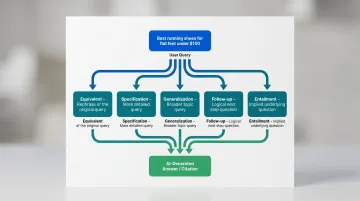
When a user asks an AI tool a conversational question, the AI breaks it into multiple sub-queries it sends to search engines, a mechanism called "query fan-out." AI systems generate up to 8 distinct sub-query types: Equivalent (rephrasing), Specification (more detailed), Generalization (broader), Follow-up (logical next steps), and Entailment (implied questions).
Example of Query Fan-Out:
User asks: "Best running shoes for flat feet under $150"
AI generates sub-queries:
- "running shoes flat feet reviews"
- "best budget running shoes 2026"
- "flat feet pronation control shoes"
- "marathon shoes durability under 150"
- "running shoes flat feet inventory available"
To appear in citations, your pages need to rank for these downstream keyword variations. Google's AI Mode and Deep Research can fire "hundreds of searches" in parallel, reaching approximately 20 iterations before quality flattens.
How to Reverse-Engineer Fan-Out Queries:
- Take a target customer question: "What's the best protein powder for muscle gain on a vegan diet?"
- Translate it into 5-10 Google-style search queries:
- "best vegan protein powder muscle building"
- "plant based protein powder complete amino acids"
- "vegan protein powder reviews 2026"
- "pea protein vs soy protein muscle gain"
- "high protein vegan powder under $50"
- Ensure your product or content pages rank for each variation
Write Content That Is Dense, Snippable, and Machine-Digestible
AI search engines favor content that gets to the point, includes specific entities (statistics, dates, named products, notable claims), and is organized in short, focused paragraphs with clear headings.
Information Density Principles:
- Lead with the answer in the first sentence of each section
- Use specific numbers, percentages, and data points
- Include named entities (brands, products, locations, people)
- Keep paragraphs to 2-3 lines maximum
- Structure content with clear H2/H3 headings
One more constraint worth building into every paragraph: AI often cites a snippet rather than linking to an entire page. Each paragraph must be independently understandable without surrounding context, fluffy, padded content gets skipped entirely.
Omnivue's Approach:
As a Shopify Partner, Omnivue audits and restructures store content for AI discoverability across ChatGPT, Gemini, and Perplexity using GPT-5-powered content optimization. In practice, this means rewriting product descriptions to pass semantic clarity checks, tagging entities AI systems recognize, and restructuring FAQ blocks so individual chunks rank for fan-out sub-queries. Brands that have gone through this process typically see citation appearances within 60-90 days of implementation.
How to Track and Measure GEO Success on Shopify
GEO measurement requires a two-track framework: monitoring brand presence in AI responses and tracking referral traffic from AI platforms.
Track 1: Generative Answer Mentions and Citations
Monitor whether your brand name appears in AI responses to relevant prompts. Note the sentiment (positive, neutral, negative) and position within the answer. BrightEdge analysis found that commercial-intent queries trigger 4-8x higher brand mentions than informational ones.
Track whether your website URLs appear as cited sources in AI answers. Citations work like traditional SERPs, the first position carries significantly more weight than the fifth.
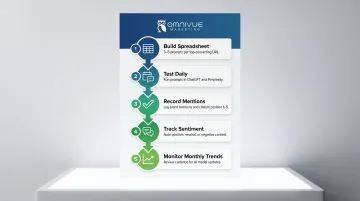
Manual Prompt Tracking Method (Budget-Friendly):
- Build a spreadsheet of 3-5 prompts per top-converting Shopify URL
- Test each prompt daily in ChatGPT and Perplexity
- Record brand mentions (yes/no) and citation position (1-5)
- Track sentiment and context of mentions
- Monitor monthly trends
Start with your top 20 highest-converting URLs to avoid data overload. Set a monthly GEO audit cadence since AI models update retrieval methods frequently.
Track 2: AI Referral Traffic
GA4 has no built-in AI traffic channel. ChatGPT, Perplexity, and Gemini referrals land in Direct or generic Referral by default. Create a custom channel group to isolate AI traffic, positioned above the Referral channel in priority order.
Trackable AI Referral Domains:
- chatgpt.com
- openai.com
- perplexity.ai
- gemini.google.com
- claude.ai
- anthropic.com
- copilot.microsoft.com
- mistral.ai
One important limitation: Google combines traditional and AI Overview traffic, so clicks from AI Overviews appear as standard organic traffic, not separately reportable in GA4.
Third-Party GEO Tracking Tools
Frequently Asked Questions
Is GEO replacing SEO for Shopify stores?
No-GEO complements SEO rather than replacing it. Most AI platforms rely on Google search indices for citations, so strong SEO performance directly supports GEO visibility. Both are required for full modern search coverage across traditional and AI-powered channels.
How do I know if my Shopify store is showing up in AI search results?
Open ChatGPT or Perplexity, type prompts a customer would use to find your products, and check whether your brand is mentioned or your URL is cited. Also check referral traffic in Shopify Analytics or GA4 for chatgpt.com and perplexity.ai domains.
Which AI platforms should I optimize my Shopify store for first?
Start with Google AI Overviews since it uses existing Google rankings, followed by ChatGPT (which now uses search results for citations), and Perplexity. Strong traditional SEO covers most of these simultaneously, so you're not starting from zero on any of them.
How long does it take to see GEO results for a Shopify store?
Citation improvements can appear within weeks as AI platforms crawl updated content. Getting embedded in an AI model's core knowledge can take 8+ months due to model update cycles. Focus first on search-augmented citations, they respond to content changes fastest.
What Shopify pages benefit most from GEO optimization?
Product pages, collection pages, buying guides, and FAQ pages deliver the highest impact. AI systems pull from these pages when generating product recommendations because they're structured, specific, and query-ready.
Do small Shopify brands need GEO, or is it only for large retailers?
GEO favors quality and structure over budget or brand size. A well-structured, authoritative niche brand can be cited by AI tools ahead of larger competitors if its content is clearer, denser, and better organized. A tightly written product page often outperforms a bloated competitor catalog in AI citations.